
Stem Cell Science Chapter One
What Are Stem Cells?
The “Universal Seeds” of Life – Understanding the Essence and Wonders of Stem Cells
Definition of Stem Cells
Stem cells are a class of cells with the ability for unlimited or indefinite self-renewal. They can generate at least one type of highly differentiated daughter cell and are often referred to as the source of life.
The word “stem” refers to the trunk of a tree. Stem cells are like the seeds and branches of a tree, capable of continuous growth and differentiation. Leaves, flowers, and fruits are like the various cells formed through stem cell differentiation—such as cardiomyocytes, neurons, and liver cells—which ultimately build the body’s tissues and organs, including the heart, brain, and digestive system.
When the number of stem cells decreases and their activity declines, the aging process of the human body accelerates accordingly. This is why the scientific community regards stem cells as the “ultimate answer to anti-aging.”
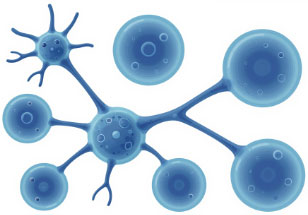
Stem Cell Differentiation Map
Stem cells can differentiate into various types of human cells, forming all tissues and organs.
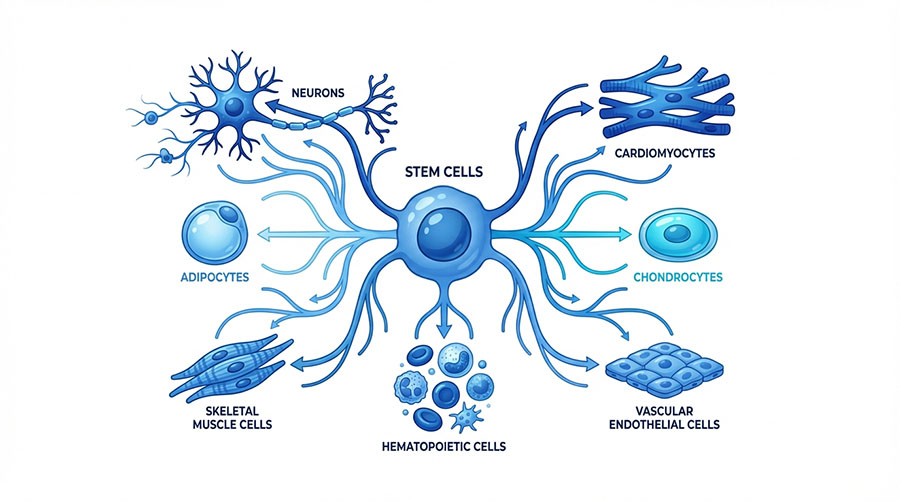
Stem cells → differentiate into the above cell types → form various human tissues and organs
Why Are Stem Cells So Important?
♾️
Unlimited self-renewal
Stem cells can replicate indefinitely and serve as the core driving force of the body’s self-repair.
🌿
Multipotent differentiation ability
They can differentiate into more than 200 types of cells, enabling the repair of virtually any damaged tissue or organ.
🛡️